Domestic hot water tank
Hot water — tank, charging and circulation. Part of the glass family — like our glass BESS, biogas plant and CHP.
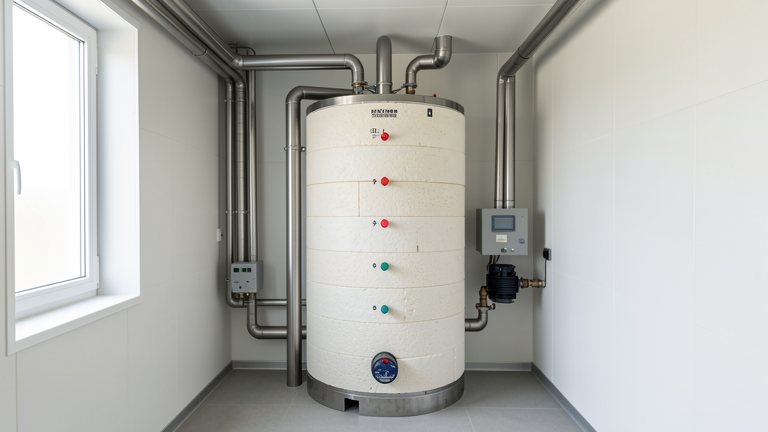
Generator → Charging circuit → Stratified tank → Draw-off points
Hot water — tank, charging and circulation. Part of the glass family — like our glass BESS, biogas plant and CHP.
The stratified tank separates generation from draw-off: hot at the top for consumption, cold at the bottom for recharging. The cleaner the stratification, the more usable volume sits in the same vessel.
Charging runs through a fresh-water station or a heat exchanger. A charging pump set too fast destroys the stratification — the tank turns lukewarm throughout instead of layered, and loses usable capacity.
Hot water — tank, charging and circulation.
Overview: The Glass Pool → · Markets: pool markets →
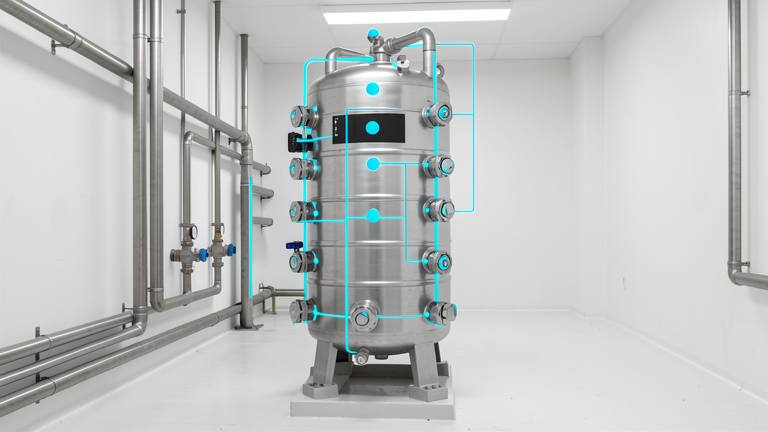
Monitored: continuously · charge state and coil temperatures
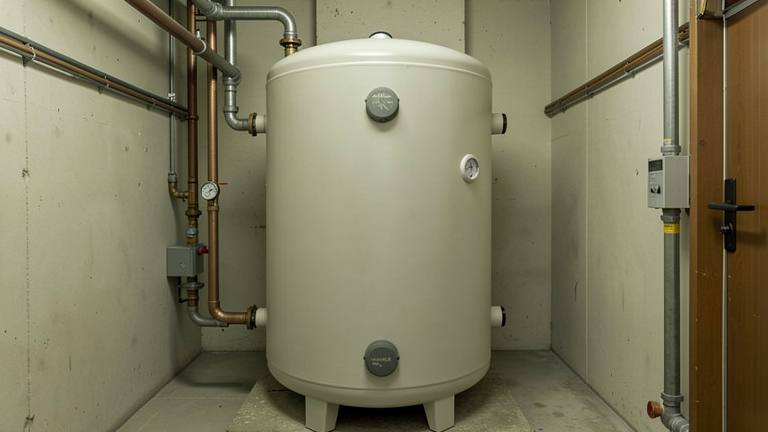
The scenario: The cylinder is reheated on a schedule rather than on demand. It stays hot through hours when nothing is drawn, and the standby loss is paid every single night.
Method proven on a live European reference aquatic center; presented anonymously.
Estimate from metered / design values. Zero-grid-import windows are real (metered).
Grounded in the applicable national standards for pool water treatment, plant energy performance and building energy performance. Same knowledge base as the European reference site; presented anonymously.
Only the hot upper section is immediately usable. If the contents mix, usable capacity falls even though the tank is the same size — and the reheat runs more often.
Basis: plant engineering
Charge duration grows for the same transferred energy, and the spread in the charging circuit narrows. Both are measurable long before output visibly collapses.
Basis: plant engineering
It can only be measured on the actual installation: during a draw-off-free night the tank temperature drops by a specific amount, and the loss follows from that. A blanket figure would be guesswork.
Basis: plant engineering
Stromfee.US licenses the pool & wellness HVAC AI — proven in Europe, deployed on your existing plant. Single property, portfolio or chain.
Request software license →