Cooking equipment
Kitchen — refrigeration, dishwashing, cooking, exhaust. Part of the glass family — like our glass BESS, biogas plant and CHP.
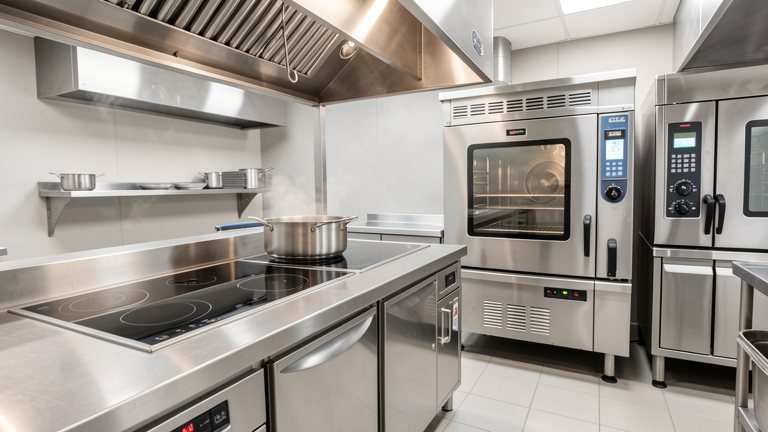
Delivery → Cooking block → Cooking equipment → Service
Kitchen — refrigeration, dishwashing, cooking, exhaust. Part of the glass family — like our glass BESS, biogas plant and CHP.
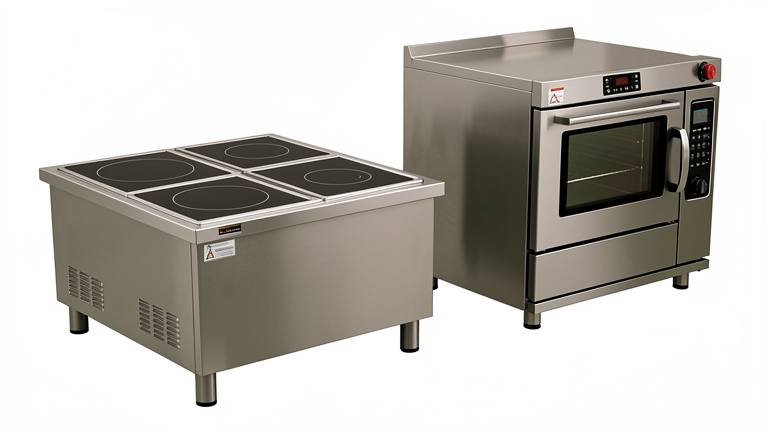
Induction hobs, combi ovens and tilting pans draw a lot of power briefly and little afterwards. Consumption arises less from cooking than from standby heat: equipment switched on in the morning and off in the evening holds temperature all day.
For the demand peak what counts is not the sum of the nameplates but the diversity factor — how many appliances actually draw together. That is measurable and usually well below what the connected load suggests.
Kitchen — refrigeration, dishwashing, cooking, exhaust.
Overview: The Glass Pool → · Markets: pool markets →
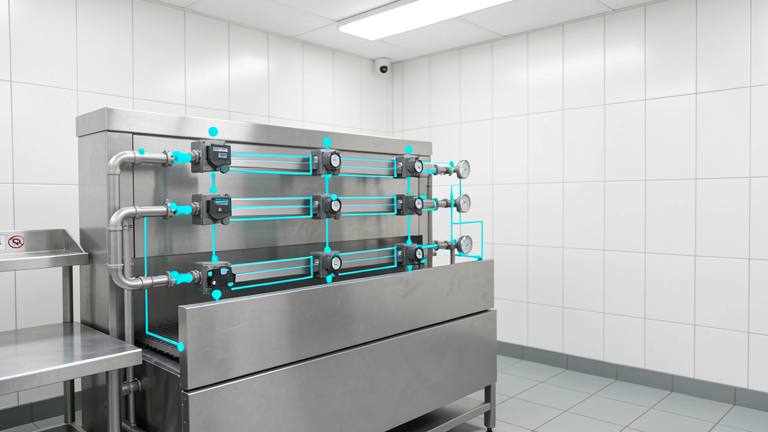
Monitored: continuously · standby and peak draw
The scenario: Appliances are switched on before service and stay on through the gaps. The standby hours never appear on a bill of their own, and the simultaneous start sets the monthly peak.
Method proven on a live European reference aquatic center; presented anonymously.
Estimate from metered / design values. Zero-grid-import windows are real (metered).
Grounded in the applicable national standards for pool water treatment, plant energy performance and building energy performance. Same knowledge base as the European reference site; presented anonymously.
Because the appliances never all draw full power at the same time. The real diversity factor is well below that — but it is site-specific and can only be evidenced by measurement.
Basis: plant engineering
That depends on appliance type, insulation and idle time. It becomes measurable through the power drawn in periods without cooking — which is exactly what the sub-meter at the feeder captures.
Basis: plant engineering
The cooking itself cannot — it follows service. What can shift is the morning start-up and the preparation, and that is precisely where the start-up peak sits.
Basis: plant engineering
Stromfee.US licenses the pool & wellness HVAC AI — proven in Europe, deployed on your existing plant. Single property, portfolio or chain.
Request software license →