Fleet charging dock
Service robots — charging dock, fleet interface. Part of the glass family — like our glass BESS, biogas plant and CHP.
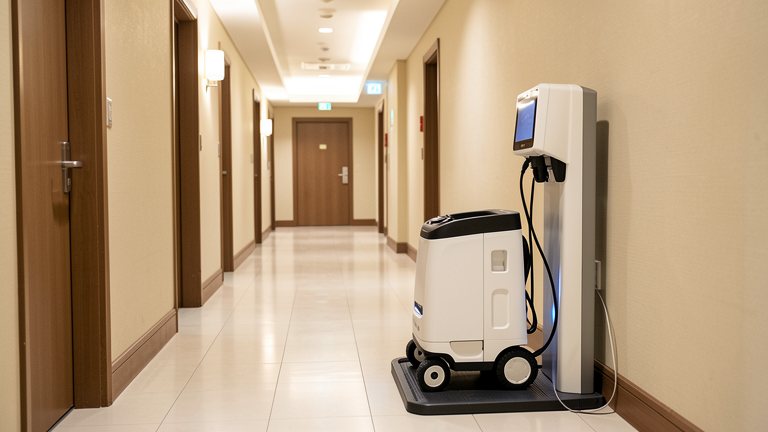
Fleet → Charging dock → Meter → Load picture
Service robots — charging dock, fleet interface. Part of the glass family — like our glass BESS, biogas plant and CHP.
Every service robot returns to a dock to charge. Individually that is a small load; a fleet docking together after closing time creates a new night-time peak.
That load shifts well: the robots are not needed again until morning. What is missing is the measurement — without a meter at the dock the fleet stays invisible in the load picture.
Service robots — charging dock, fleet interface.
Overview: The Glass Pool → · Markets: pool markets →
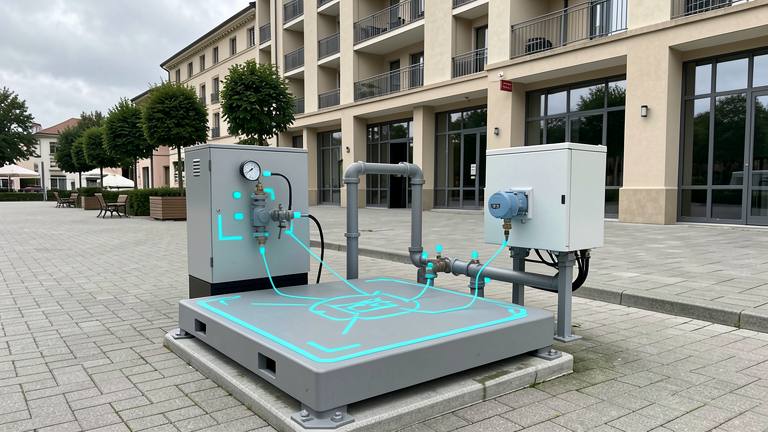
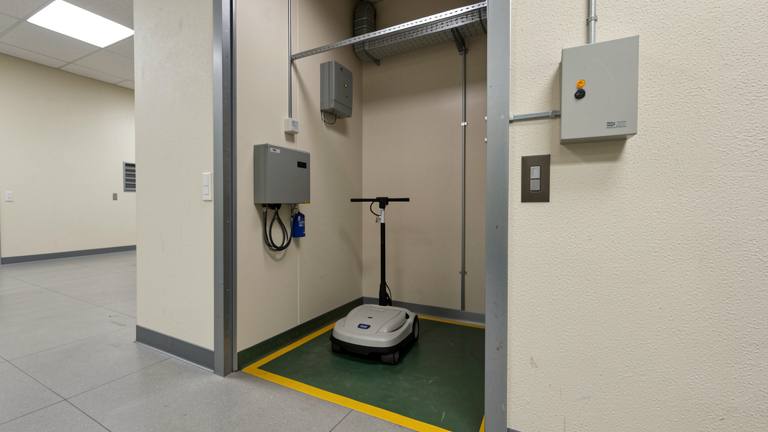
Monitored: continuously · charge windows of the dock
The scenario: The dock charges whenever a robot returns, which is reliably during the day. The same energy would cost less at night — nothing is broken, only badly timed.
Method proven on a live European reference aquatic center; presented anonymously.
Estimate from metered / design values. Zero-grid-import windows are real (metered).
Grounded in the applicable national standards for pool water treatment, plant energy performance and building energy performance. Same knowledge base as the European reference site; presented anonymously.
Per robot it is small. It becomes relevant through simultaneity: if the whole fleet docks together after closing, an additional peak forms in an hour when little else runs.
Basis: plant engineering
It shows the robots’ state of charge, not the electrical load at the service connection. For the load picture what counts is the meter at the feeder — vendor-neutral and inside your own building.
Basis: plant engineering
Usually yes, because many hours lie between docking in the evening and deployment in the morning. The window is far longer than the charging time.
Basis: plant engineering
Stromfee.US licenses the pool & wellness HVAC AI — proven in Europe, deployed on your existing plant. Single property, portfolio or chain.
Request software license →