Free cooling & waste heat
Cooling — chiller, heat rejection, waste heat. Part of the glass family — like our glass BESS, biogas plant and CHP.
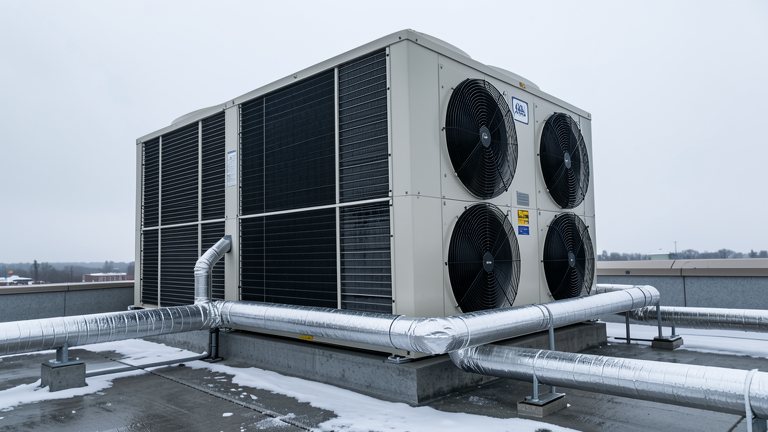
Outside air → Dry cooler → Free cooling → Chilled water
Cooling — chiller, heat rejection, waste heat. Part of the glass family — like our glass BESS, biogas plant and CHP.
When the outside air is cool enough, the dry cooler can chill the water directly — the compressor stays largely off. This is the single biggest lever in cooling, and it hinges only on a clean release logic.
The other half is the waste heat: the condenser gives off heat anyway. Routing it into the hot water costs no additional generation — only the pipework to get there.
Cooling — chiller, heat rejection, waste heat.
Overview: The Glass Pool → · Markets: pool markets →
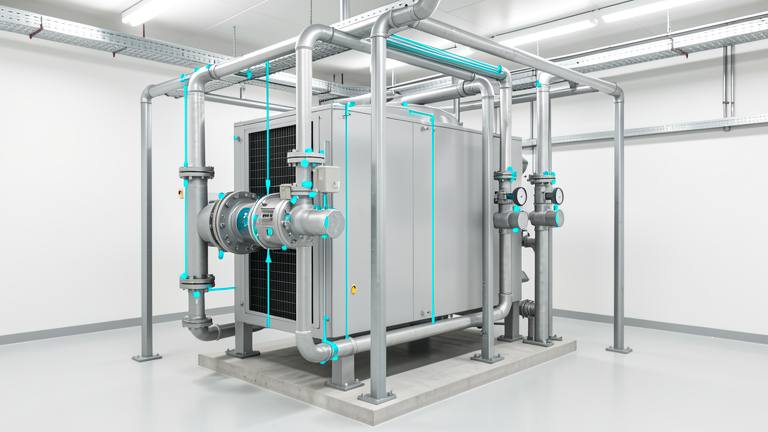
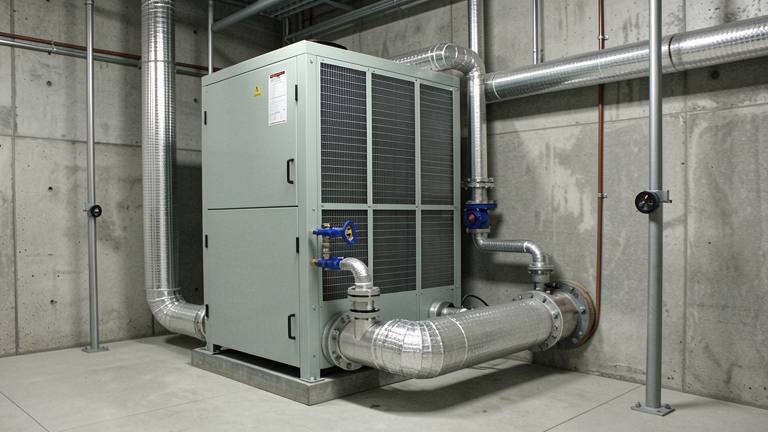
Monitored: continuously · outdoor temperature against the bypass position
The scenario: Free cooling is enabled on a fixed seasonal date rather than on the actual outdoor temperature. Every cool day outside that window is a day the chiller ran for nothing.
Method proven on a live European reference aquatic center; presented anonymously.
Estimate from metered / design values. Zero-grid-import windows are real (metered).
Grounded in the applicable national standards for pool water treatment, plant energy performance and building energy performance. Same knowledge base as the European reference site; presented anonymously.
That depends on the chilled water setpoint and the dry cooler design. The higher the chilled water may run, the earlier in the year the release takes effect — only both together give the usable hours.
Basis: plant engineering
Because the release is set too conservatively, or was never reviewed after commissioning. It only becomes visible when outdoor temperature and compressor run time are placed side by side.
Basis: plant engineering
It arises at a temperature level that suits hot water preheating. The question is not the potential but whether the pipework to get there exists.
Basis: plant engineering
Stromfee.US licenses the pool & wellness HVAC AI — proven in Europe, deployed on your existing plant. Single property, portfolio or chain.
Request software license →