Chiller
Cooling — chiller, heat rejection, waste heat. Part of the glass family — like our glass BESS, biogas plant and CHP.
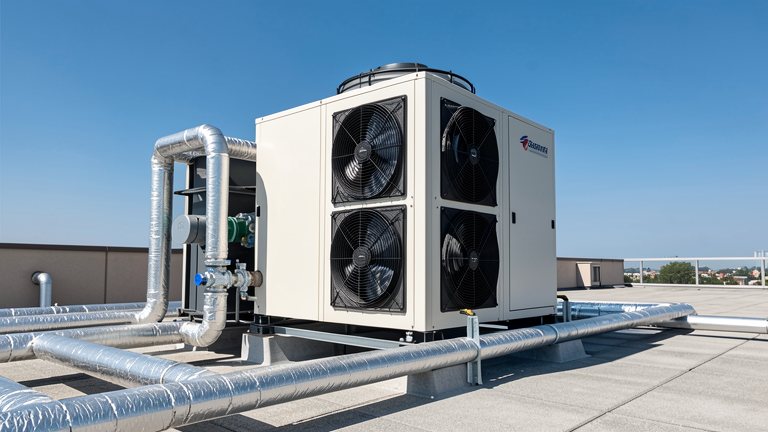
Cooling demand → Chiller → Condenser → Dry cooler
Cooling — chiller, heat rejection, waste heat. Part of the glass family — like our glass BESS, biogas plant and CHP.
The chiller produces chilled water for comfort and process cooling. Its efficiency (EER) is not a constant: it depends on the chilled water temperature, the condensing temperature and the condition of the heat exchangers.
Important in practice: the EER is rarely measured. It comes from cooling output divided by electrical input — which requires both figures, not just the chiller’s own display.
Cooling — chiller, heat rejection, waste heat.
Overview: The Glass Pool → · Markets: pool markets →
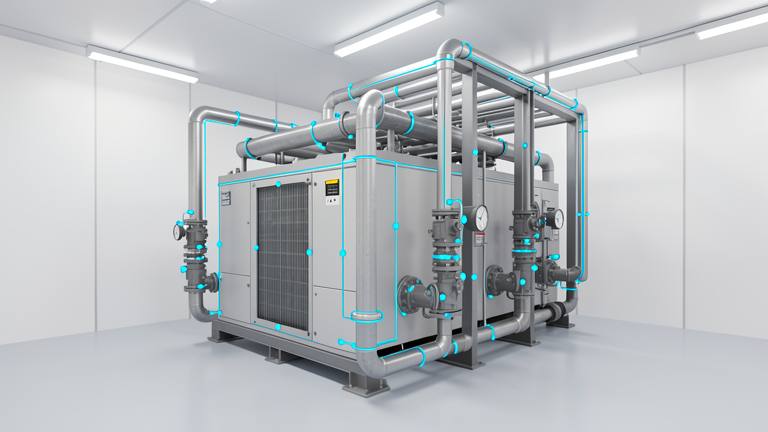
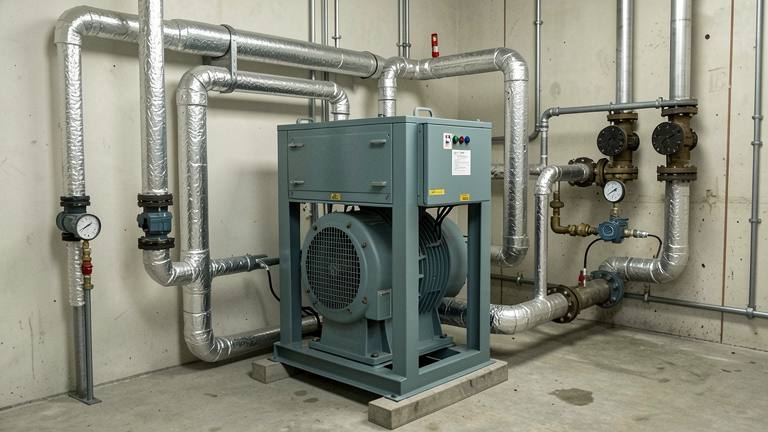
Monitored: continuously · chilled water spread and compressor input
The scenario: The chiller holds its setpoint and therefore looks healthy. Only the spread between flow and return, read against the electrical input, shows how much cooling each kilowatt really buys.
Method proven on a live European reference aquatic center; presented anonymously.
Estimate from metered / design values. Zero-grid-import windows are real (metered).
Grounded in the applicable national standards for pool water treatment, plant energy performance and building energy performance. Same knowledge base as the European reference site; presented anonymously.
Because cooling output there is usually estimated from characteristic curves rather than measured. The EER only becomes reliable with a cooling meter and an electricity meter — then it is a computed but measured figure.
Basis: plant engineering
Every degree of increase noticeably unloads the compressor. Exactly how much depends on the plant and the operating point — it becomes measurable immediately, because both electrical input and cooling output are captured.
Basis: plant engineering
The condensing temperature rises further above the outdoor temperature than it used to, and the EER falls at unchanged cooling output.
Basis: plant engineering
Stromfee.US licenses the pool & wellness HVAC AI — proven in Europe, deployed on your existing plant. Single property, portfolio or chain.
Request software license →