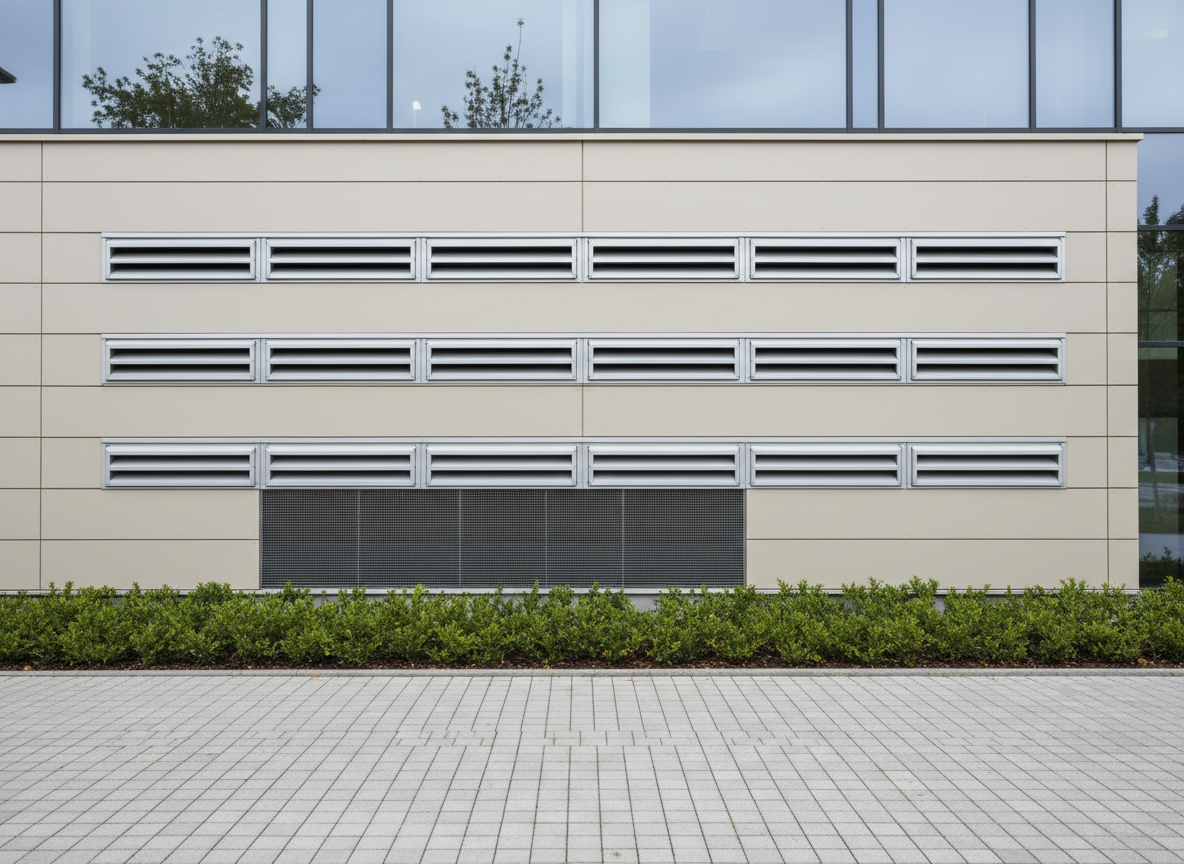
Outdoor air intake
Ventilation/dehumidification — the silent 24/7 load, with heat recovery. Part of the glass family — like our glass BESS, biogas plant and CHP.
Outdoor air → Fresh air → Heat recovery → Heating coil → Hall → Exhaust
Ventilation/dehumidification — the silent 24/7 load, with heat recovery. Part of the glass family — like our glass BESS, biogas plant and CHP.
The outdoor air is the hall's fresh-air source. The applicable standard requires a hygienic minimum (about 4 L/(s·m² of water surface) in base mode, 30 m³/h per person at full occupancy) to remove pollutants and moisture.
In winter every extra m³ of outdoor air is expensive: cold air must be heated to 30 °C. Cutting humidity through outdoor air alone doubles the winter ventilation heat loss.
Dehumidification with heat recovery (the ventilation standard for indoor pools, 36,000 m3/h):
Overview: The Glass Pool → · Markets: pool markets →
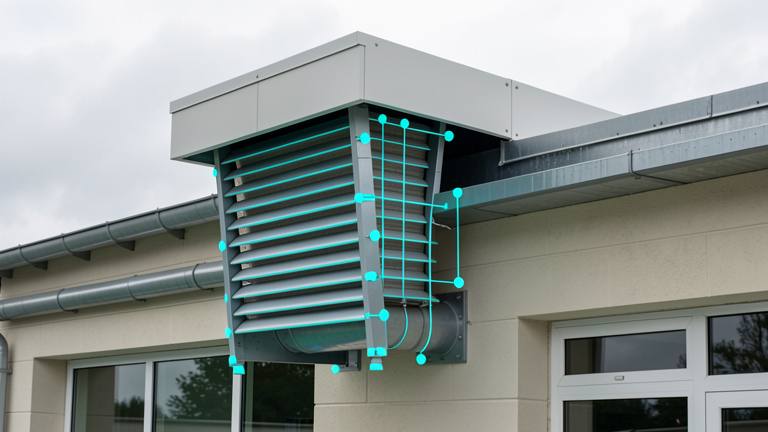
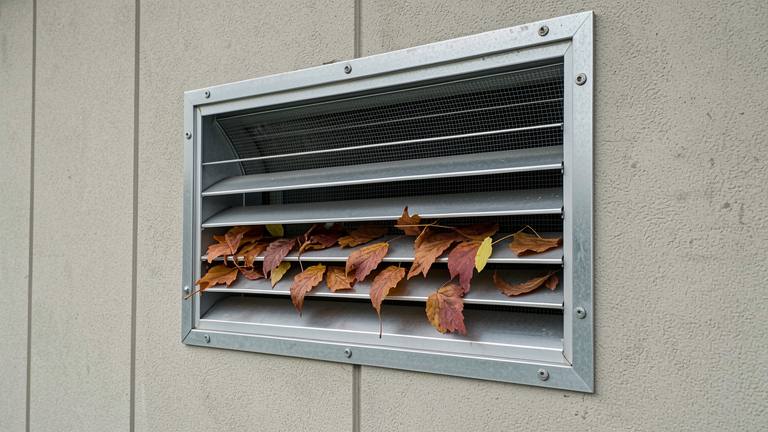
Monitored: continuously · intake resistance across the louvre and filter
The scenario: Leaves and pollen close the intake gradually. The fan holds the setpoint by drawing more power, so the air volume looks correct on paper while the resistance quietly climbs.
Method proven on a live European reference aquatic center; presented anonymously.
Estimate from metered / design values. Zero-grid-import windows are real (metered).
Grounded in the applicable national standards for pool water treatment, plant energy performance and building energy performance. Same knowledge base as the European reference site; presented anonymously.
The applicable standard defines the target hall climate: air temperature 30 °C ± 2 K, relative humidity 55 % ± 5 %. Outdoor-air rate at least 30 m³/h per person at full occupancy, at least 4 L/(s·m² of water surface) in base mode. For a hall with 355 m² water surface: 4 × 355 × 3.6 = 5,112 m³/h minimum; in practice The applicable standard recommends ~16,000 m³/h for comfort and pollutant removal (trihalomethanes). Heat recovery via plate exchanger at 65-75 % efficiency is standard.
Basis: the applicable national standard
The national buildings energy act the national buildings energy act 2024 treats pools as non-residential buildings. Mandatory air-conditioning inspection every 4 years (ventilation > 12 kW). On change of ownership or major refurbishment, tighter envelope U-values apply (external wall U ≤ 0.24 W/(m²·K)). A demand-based energy certificate is required above 250 m² of heated floor area. A hall pool with 1,800 m² of envelope at U=0.8 does not meet new-build standards — so grant funding for envelope refurbishment (up to 35 % rate) is available.
Basis: the national buildings energy act 2024 (the national buildings energy act)
When hall humidity is too high (rH > 65 %) the traditional fix is raising the outdoor-air rate — which doubles the heat loss in winter. The modern approach is a dehumidifying heat pump (sorption wheel or reversible compressor) that removes water directly from the hall air without raising outdoor air. Investment 30-80 k€ depending on size, payback 4-7 years. On a hall running 16,000 m³/h in cold winters a sorption wheel can save 30-50 % of the ventilation heating energy.
Basis: the applicable national standard
The applicable standard governs ventilation with hygiene requirements. For pool halls: filter class F7 minimum, 6-month service interval. Plate heat-recovery exchangers must be able to drain condensate. Hygiene inspection every 2 years (logged in the maintenance record). Pool-specific: because of chloramines, corrosion-resistant materials (V4A stainless, plastic) are required in the exhaust stream; aluminium exchangers are not permitted in the pool-hall exhaust air.
Basis: the applicable national standard
Stromfee.US licenses the pool & wellness HVAC AI — proven in Europe, deployed on your existing plant. Single property, portfolio or chain.
Request software license →