Filter pumps
Power/PV — controllable load, grid draw toward zero. Part of the glass family — like our glass BESS, biogas plant and CHP.
PV → LV distribution → AI controller → Pool load → Grid → BESS
Power/PV — controllable load, grid draw toward zero. Part of the glass family — like our glass BESS, biogas plant and CHP.
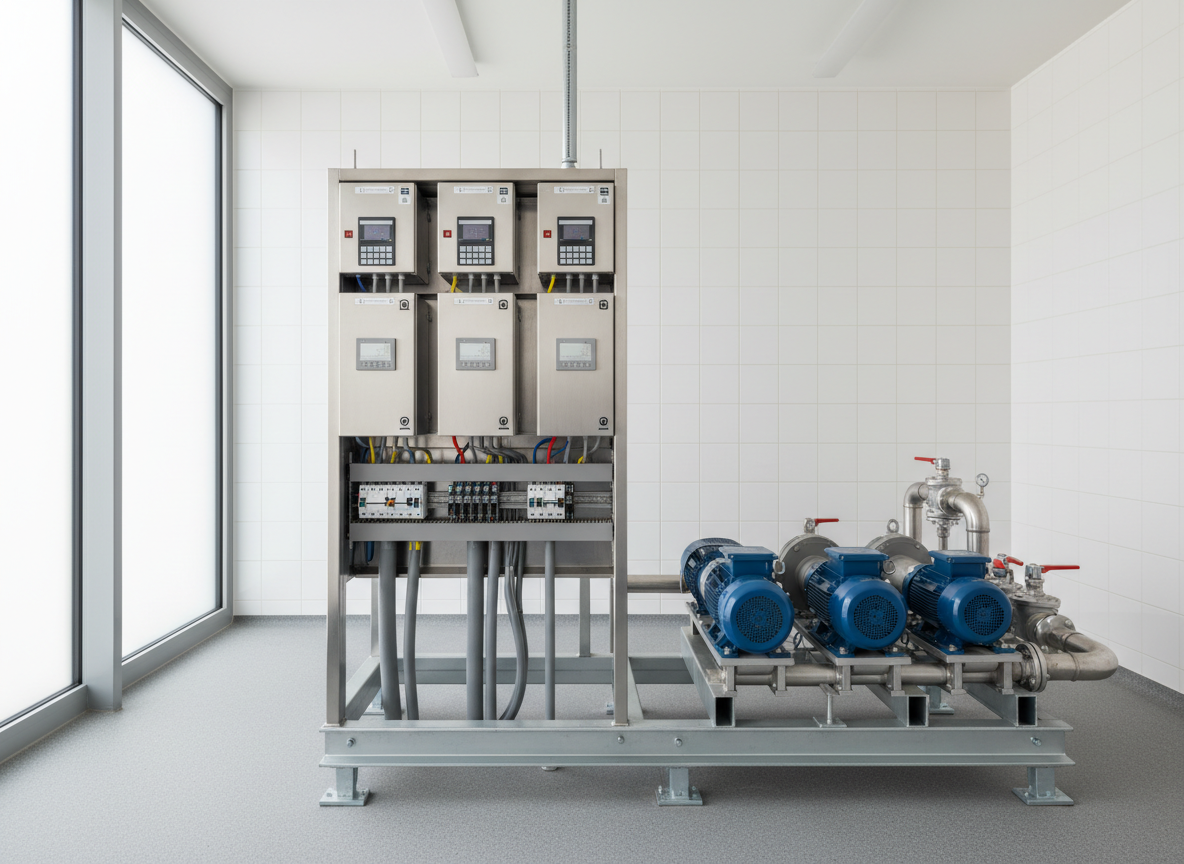
The circulation pumps are the heart of the water loop: they move the entire pool volume through filter and heat exchanger several times a day (the pool-water treatment standard turnover).
As a 24/7 base load they are one of the biggest power consumers in the facility. With variable-speed pumps (VFD) the AI matches flow to bather load instead of running flat-out — saving a large share of the pumping electricity.
PV as controllable load, LV distribution, grid as buffer:
Overview: The Glass Pool → · Markets: pool markets →
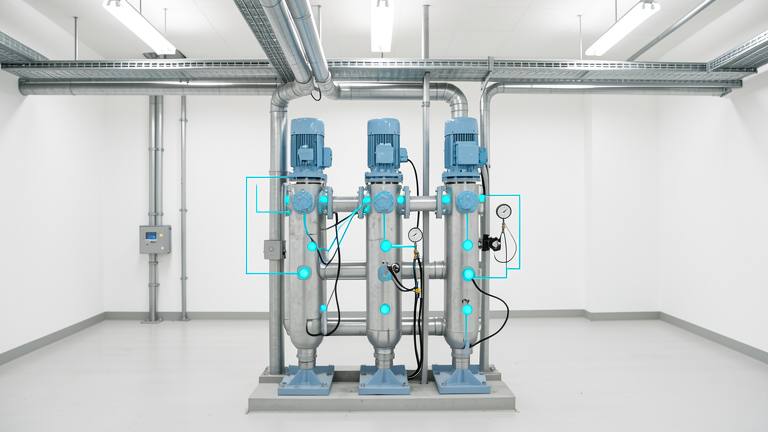
Monitored: continuously · head, flow and motor input
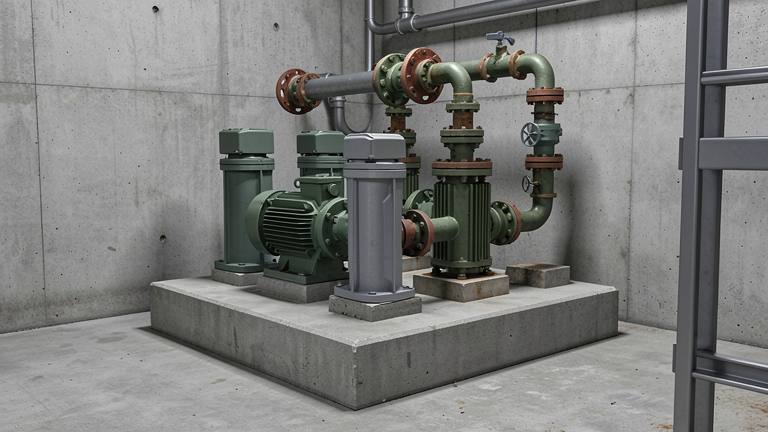
The scenario: The pumps hold the required flow by working harder against a rising resistance. Efficiency falls steadily, and the only visible trace is on the electricity meter.
Method proven on a live European reference aquatic center; presented anonymously.
Estimate from metered / design values. Zero-grid-import windows are real (metered).
Grounded in the applicable national standards for pool water treatment, plant energy performance and building energy performance. Same knowledge base as the European reference site; presented anonymously.
The applicable standard prescribes a maximum residence time of the pool water, depending on pool type: swimmer pools 4 h turnover, non-swimmer/paddling 1-2 h. This sets the minimum filter flow rate. For a 242 m³ lap pool at 4 h turnover that is 60.5 m³/h of filter capacity. Filter backwash once per day or above 0.5 bar differential pressure. Backwash water is warm (pool temperature − 3-5 K) and therefore a valuable heat-pump source.
Basis: the applicable national standard
Load-management systems switch shiftable loads in sync with PV production. In a pool the ideal moves are: modulate the heat pumps onto the PV profile, raise ventilation stages when PV surplus exists, run the main filter pumps during the day, dim lighting during daylight. Investment 30-60 k€ depending on the number of switching devices and building-management integration. Self-consumption ratio typically rises from 30 % to 55-70 % with broad integration. Precondition: all main loads are Modbus/MQTT-capable.
Basis: Practice (e3dc, ESL, Solarwatt)
The ISEK programme co-funds municipal climate-protection and refurbishment measures at 50 %, capped at 500,000 € per measure and 5 M€ per project. Precondition: the measure is anchored in the municipal climate-protection plan. Processing takes 6-12 months. Measures can be bundled (e.g. heat pump + insulation + load management in one application) but cannot be combined with federal BAFA funding on the same asset. Note: PV car-port roofing is usually funded separately at 30 %; ISEK eligibility for PV is a case-by-case decision requiring a climate-protection rationale.
Basis: ISEK (German regional urban-development grant)
This regional renewables programme funds market-introduction investments at 30 %, with faster processing than ISEK (typically 3-4 months). It applies to PV systems, load-management systems and (limited) storage. It combines with ISEK on the same property but not on the same measure. Relevant example: a 400 kWp car-port PV array could be funded at 30 % here or 50 % via ISEK — the higher ISEK rate is strategically better but not guaranteed to be eligible for PV.
Basis: Regional renewables market-introduction grant
This regional climate-protection directive funds municipal climate investments at 40 %. It applies specifically to efficiency measures such as pool covers, LED lighting and pump replacement. It can be combined with ISEK provided the measures differ. Example: an outdoor-pool night cover (80 k€ investment, 17 k€/a saving) is ideal — payback with this grant is 2.8 years.
Basis: Regional climate-protection funding directive
Stromfee.US licenses the pool & wellness HVAC AI — proven in Europe, deployed on your existing plant. Single property, portfolio or chain.
Request software license →