Lighting
Power/PV — controllable load, grid draw toward zero. Part of the glass family — like our glass BESS, biogas plant and CHP.
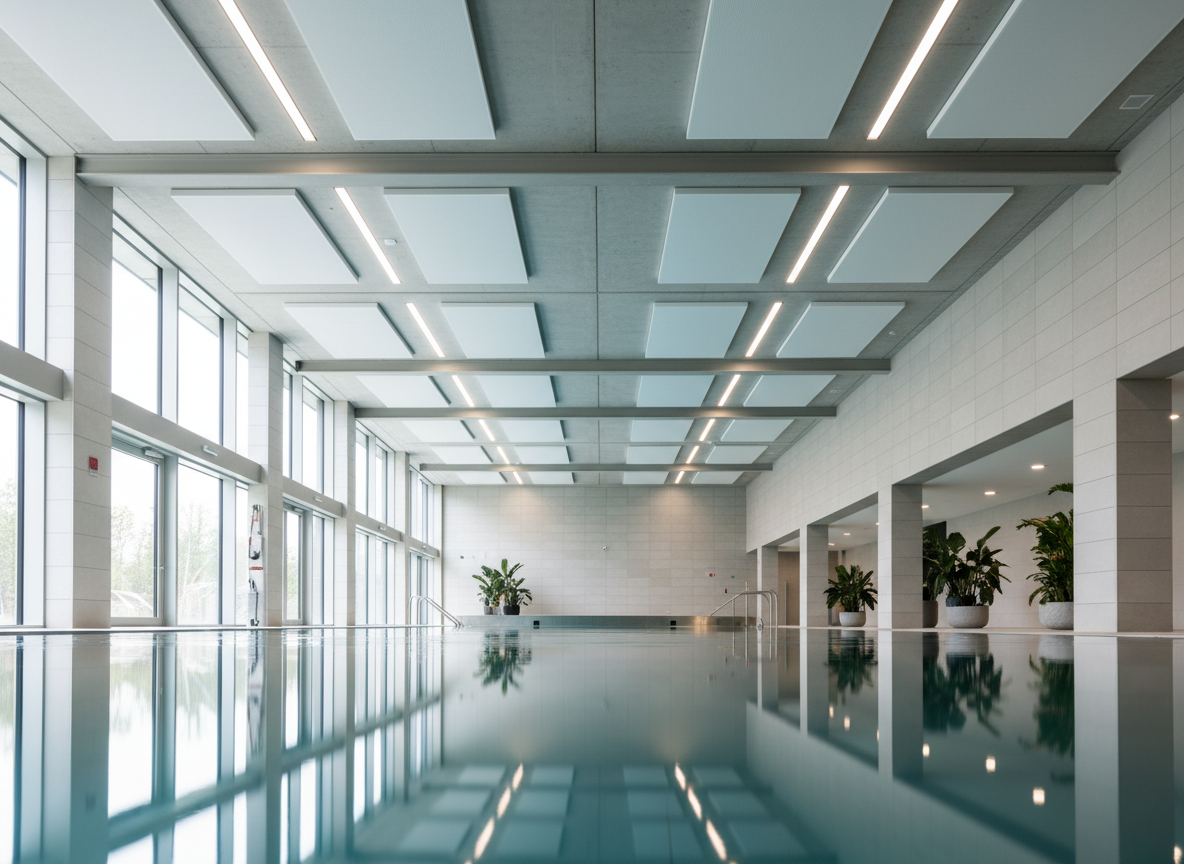
PV → LV distribution → AI controller → Pool load → Grid → BESS
Power/PV — controllable load, grid draw toward zero. Part of the glass family — like our glass BESS, biogas plant and CHP.
Hall and outdoor lighting is an often-underrated continuous load — it frequently runs longer than needed.
With LED, presence and daylight control the AI runs lighting to actual demand and shifts switchable shares into PV hours.
PV as controllable load, LV distribution, grid as buffer:
Overview: The Glass Pool → · Markets: pool markets →
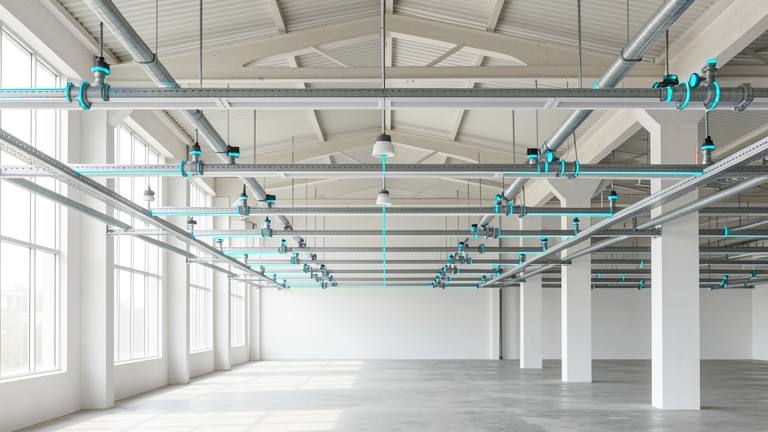
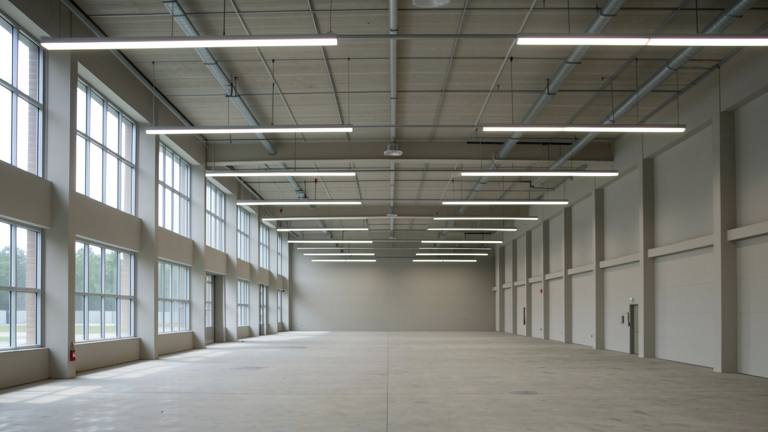
Monitored: continuously · light level against daylight
The scenario: The lighting runs at full output through bright afternoons because it is switched by the clock, not by the daylight coming through the windows.
Method proven on a live European reference aquatic center; presented anonymously.
Estimate from metered / design values. Zero-grid-import windows are real (metered).
Grounded in the applicable national standards for pool water treatment, plant energy performance and building energy performance. Same knowledge base as the European reference site; presented anonymously.
This regional climate-protection directive funds municipal climate investments at 40 %. It applies specifically to efficiency measures such as pool covers, LED lighting and pump replacement. It can be combined with ISEK provided the measures differ. Example: an outdoor-pool night cover (80 k€ investment, 17 k€/a saving) is ideal — payback with this grant is 2.8 years.
Basis: Regional climate-protection funding directive
Load-management systems switch shiftable loads in sync with PV production. In a pool the ideal moves are: modulate the heat pumps onto the PV profile, raise ventilation stages when PV surplus exists, run the main filter pumps during the day, dim lighting during daylight. Investment 30-60 k€ depending on the number of switching devices and building-management integration. Self-consumption ratio typically rises from 30 % to 55-70 % with broad integration. Precondition: all main loads are Modbus/MQTT-capable.
Basis: Practice (e3dc, ESL, Solarwatt)
The ISEK programme co-funds municipal climate-protection and refurbishment measures at 50 %, capped at 500,000 € per measure and 5 M€ per project. Precondition: the measure is anchored in the municipal climate-protection plan. Processing takes 6-12 months. Measures can be bundled (e.g. heat pump + insulation + load management in one application) but cannot be combined with federal BAFA funding on the same asset. Note: PV car-port roofing is usually funded separately at 30 %; ISEK eligibility for PV is a case-by-case decision requiring a climate-protection rationale.
Basis: ISEK (German regional urban-development grant)
This regional renewables programme funds market-introduction investments at 30 %, with faster processing than ISEK (typically 3-4 months). It applies to PV systems, load-management systems and (limited) storage. It combines with ISEK on the same property but not on the same measure. Relevant example: a 400 kWp car-port PV array could be funded at 30 % here or 50 % via ISEK — the higher ISEK rate is strategically better but not guaranteed to be eligible for PV.
Basis: Regional renewables market-introduction grant
The federal Module 2 funds heat pumps, thermal storage and heat-network connections in non-residential buildings at 40 %. Important: it is NOT combinable with the regional ISEK grant on the same measure. Municipalities must choose: ISEK 50 % (higher rate, longer processing) or the federal 40 % (faster, nationwide). ISEK is usually the better choice when the climate rationale holds; the federal grant is a fallback if ISEK is refused.
Basis: Federal efficient-energy grant, Module 2
Stromfee.US licenses the pool & wellness HVAC AI — proven in Europe, deployed on your existing plant. Single property, portfolio or chain.
Request software license →