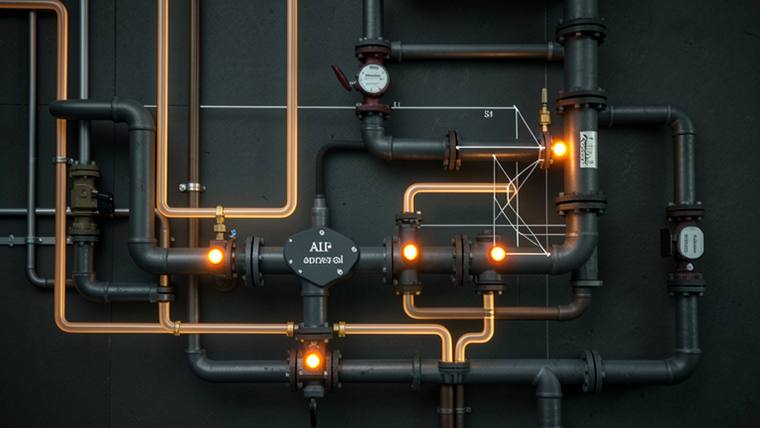
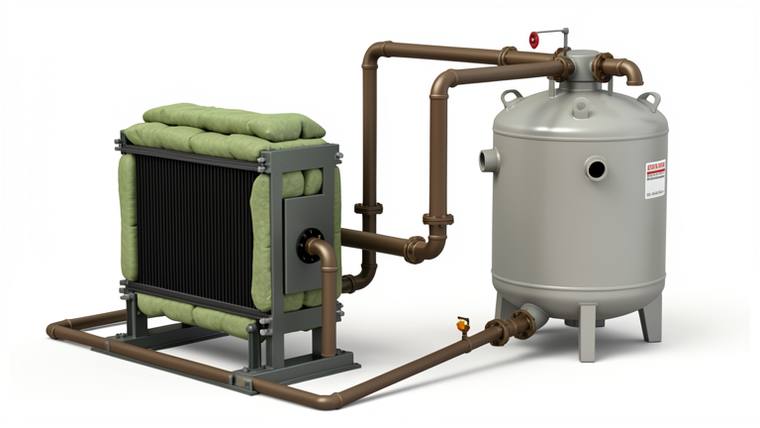
Ventilation/dehumidification — the silent 24/7 load, with heat recovery. Part of the glass family — like our glass BESS, biogas plant and CHP.
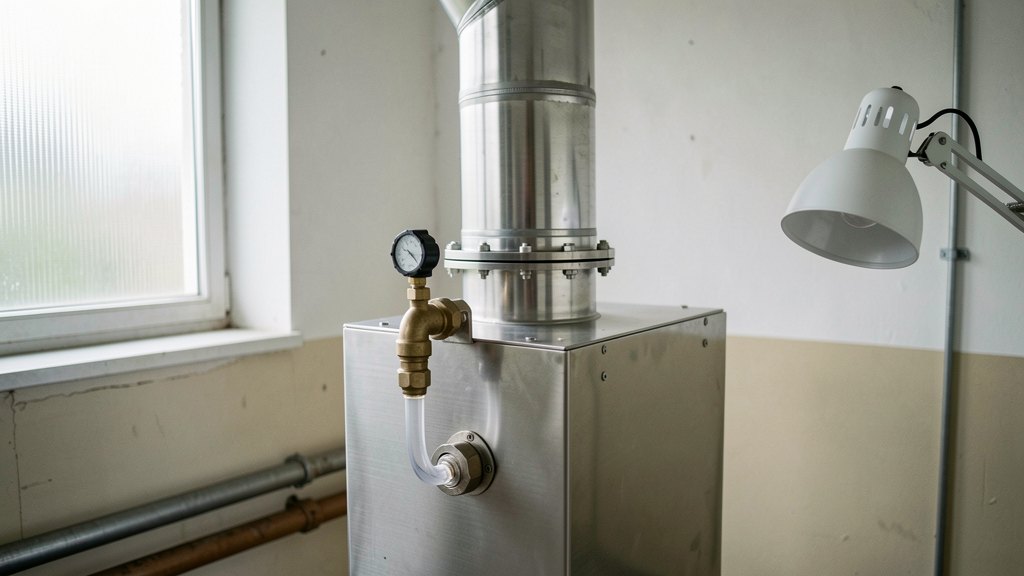
By falling below the dew point (approx. 57 °C for biogas), the latent heat of the water vapour is utilised; increases the thermal efficiency of the CHP unit further and lowers the exhaust gas temperature.
connects… · anonymous reference plant · read-only from the process control system, calculated in-house Flow: … °C Return: … °C Buffer top … °C Buffer bottom … °C Excerpt from … plant measurements. To the detailed explanation page with video →

Monitored: continuous
The scenario: if the temperature difference decreases, the CHP unit extracts less heat, resulting in a poorer overall efficiency and lower cogeneration benefit. The AI: detects the shrinking temperature difference early, before the amount of heat drops significantly. It identifies the trend before the limit value is reached.
The use of latent heat increases the total thermal efficiency and reduces the thermal load on the exhaust gas system. By lowering the exhaust gas temperature, the service life of the components is extended. The additional heat recovery optimises the energy yield per unit of biomass used. Heating water flow rate (m³/h) · Flow/Return temperature difference (K) → — kW thermal Calculation path: flow rate × temperature difference × 1.16 kWh/(m³·K) (water)
Stromfee.US licenses the pool & wellness HVAC AI — proven in Europe, deployed on your existing plant. Single property, portfolio or chain.
Request software license →