The Glass CHP · CHP

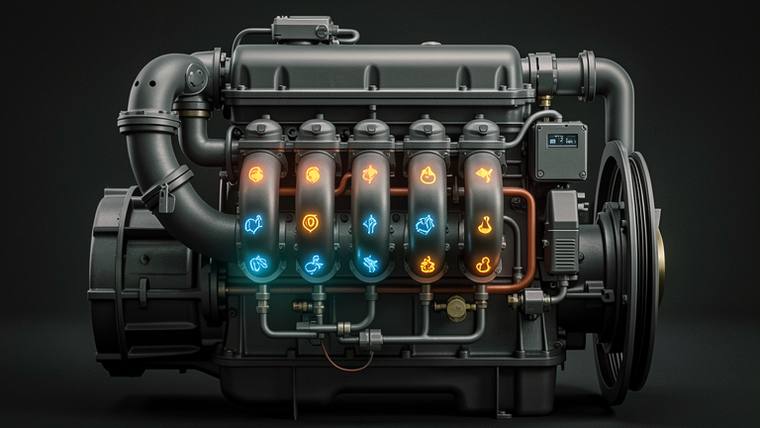
What causes knocking in the gas engine?

Ventilation/dehumidification — the silent 24/7 load, with heat recovery. Part of the glass family — like our glass BESS, biogas plant and CHP.
What causes knocking in the gas engine?
Outdoor air Fresh air Heat recovery Heating coil Hall Exhaust
Glass-box in 4 steps

Understand → See it live → What the AI does → Your benefit

Step 1 of 4
1
Understand
2
See it live
3
What the AI does
Your benefit

What is What causes knocking in the gas engine??

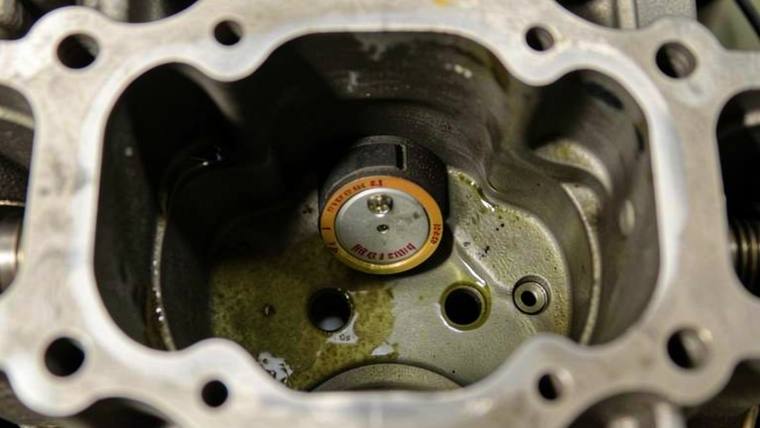
Knocking is caused by uncontrolled self-ignition of the mixture: causes are a mixture that is too rich (Lambda too low), charge air temperature that is too high, ignition timing that is too early or high methane content — countermeasures: increase Lambda, check charge air cooling, correct ignition timing.

The plant — right now

connect… · anonymous reference plant · read-only from the process control system, calculated in-house oil pressure … bar oil temperature … °C cooling water … °C speed … 1/min charge pressure … bar engine room … °C excerpt from … measured values of the plant. To the detailed explanation page with video →

What the AI reads from these values

What the AI reads
  • Deviating Lambda ratio (mixture too rich) as an indicator for insufficient air supply
  • Increased charge air temperature due to defects in the charge air cooler or intercooler
  • Incorrect ignition timing (too early), leading to pressure development outside the permissible range
  • Excessive methane content in the natural gas used, which lowers the ignition temperature
Scenario

Monitored: continuous

The scenario: a gradual drop in oil pressure or a drifting temperature remains below the alarm threshold until the emergency shutdown occurs — at the most inopportune moment. The AI: detects the deviation from normal operation early and reports it before the protection trips. It identifies the trend before the limit value is reached.

Why this matters

Early detection of knocking prevents irreversible mechanical damage to components and ensures the operating life of the CHP unit. By monitoring the charge air temperature and the Lambda value, incorrect controls can be corrected immediately. This stabilises the process and permanently optimises the efficiency of the plant. electrical power (kW) · supplied gas power (kW) → — % elec. efficiency Calculation method: electrical power ÷ gas power × 100

More pool worlds

Browse the 40 wizards

← PreviousFresh air▦ All 40
License the software

Bring the glass-box AI to your pool.

Stromfee.US licenses the pool & wellness HVAC AI — proven in Europe, deployed on your existing plant. Single property, portfolio or chain.

Request software license →