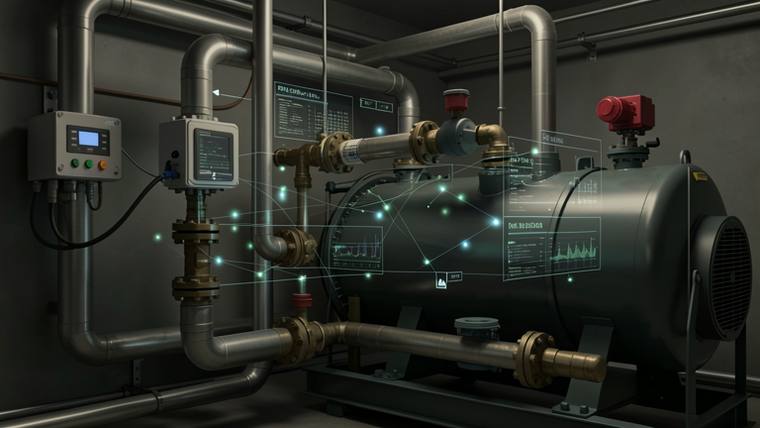
The Glass CHP · CHP

How does biogas quality affect the engine?

Ventilation/dehumidification — the silent 24/7 load, with heat recovery. Part of the glass family — like our glass BESS, biogas plant and CHP.

How does biogas quality affect the engine?
Outdoor air Fresh air Heat recovery Heating coil Hall Exhaust
Glass-box in 4 steps

Understand → See it live → What the AI does → Your benefit

Step 1 of 4
1
Understand
2
See it live
3
What the AI does
Your benefit

What is How does biogas quality affect the engine??

Methane content below 48% leads to power loss and unstable operation; H2S above 500 ppm damages engine bearings and poisons catalysts — continuous gas quality measurement and desulphurization are mandatory for long-term operation.

The plant — right now

connect… · anonymous reference plant · read-only from the process control system, calculated in-house gas volume … m³/h gas mixer … % gas level … % boost pressure … bar excerpt from … plant measurements. To the detailed explanation page with video →

What the AI reads from these values

What the AI reads
  • Methane content (CH4): Indicator for the calorific value and specific power.
  • Hydrogen sulphide content (H2S): Critical factor for the corrosion prevention of engine bearings.
  • Moisture content: Influence on ignition quality and condensate formation.
  • CO2 content: Determination of the dilution effect in the combustion process.
Scenario

Monitored: continuous

The scenario: if the methane content drops slowly, the engine begins to knock without an alarm occurring, leading to power reduction and wear. The AI: detects the quality trend early and reports it before the knocking causes damage. It identifies the trend before the limit value is reached.

Why this matters

Stable gas parameters minimise unplanned downtime and protect the expensive components of the CHP unit from chemical destruction. Continuous monitoring enables precise control of the desulphurization system. This guarantees a constant power output and significantly extends maintenance intervals. Gas volume (m³/h) · Methane content (%) → — kWh/h Calculation path: gas volume × methane content × 9.97 kWh/m³ (calorific value of methane)

More pool worlds

Browse the 40 wizards

← PreviousFresh air▦ All 40
License the software

Bring the glass-box AI to your pool.

Stromfee.US licenses the pool & wellness HVAC AI — proven in Europe, deployed on your existing plant. Single property, portfolio or chain.

Request software license →