Ventilation/dehumidification — the silent 24/7 load, with heat recovery. Part of the glass family — like our glass BESS, biogas plant and CHP.
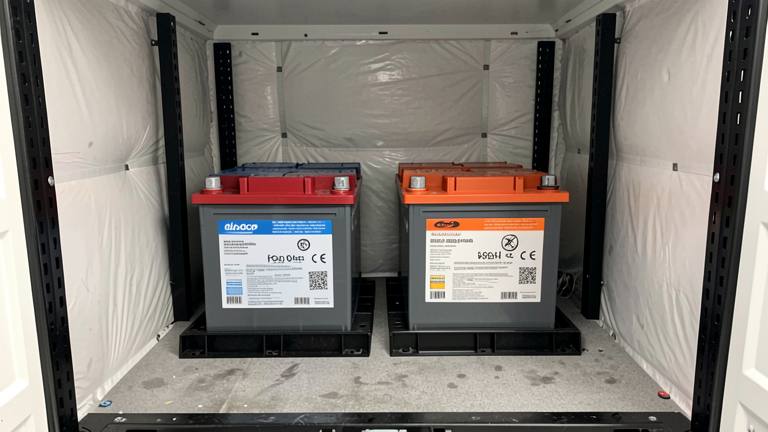
> The choice between LFP (Lithium Iron Phosphate) and NMC (Nickel Manganese Cobalt) determines the life cycle analysis of a battery energy storage system (BESS). While NMC offers higher energy density, LFP is characterized by higher thermal stability and cycle durability. The decision directly influences operating costs (OPEX) and the guaranteed lifespan of the plant.
For this component, no dedicated register is connected; therefore, no example value is provided here. Where the plant measures it, the value is read as read-only and calculated internally. It is visible via connected components.

Monitored: continuous
The scenario: > Monitored: continuously · every cell, every rack The scenario: a weak cell silently limits capacity, resulting in lower yield per cycle, without an alarm. The AI: tracks outliers over cycles and reports them before they slow down the string. It identifies the trend before the limit is reached.
The choice of the correct cell chemistry optimises Round-Trip Efficiency and reduces replacement costs over the BESS life cycle. LFP minimises the risk of fire events and lowers maintenance costs through a higher number of cycles. NMC, however, allows for more efficient space utilization in limited areas. usable capacity (kWh) · SoC (%) · Reserve (%) → — kWh available Calculation: Capacity × (SoC − Reserve) ÷ 100
Stromfee.US licenses the pool & wellness HVAC AI — proven in Europe, deployed on your existing plant. Single property, portfolio or chain.
Request software license →Grounded in the applicable national standards for battery energy storage systems. Same knowledge base as the European reference plant; presented anonymously.
Basis: the applicable national standards. Values shown are those measured on the plant, not target figures.