The rack-module
Ventilation/dehumidification — the silent 24/7 load, with heat recovery. Part of the glass family — like our glass BESS, biogas plant and CHP.
Outdoor air → Fresh air → Heat recovery → Heating coil → Hall → Exhaust
Ventilation/dehumidification — the silent 24/7 load, with heat recovery. Part of the glass family — like our glass BESS, biogas plant and CHP.
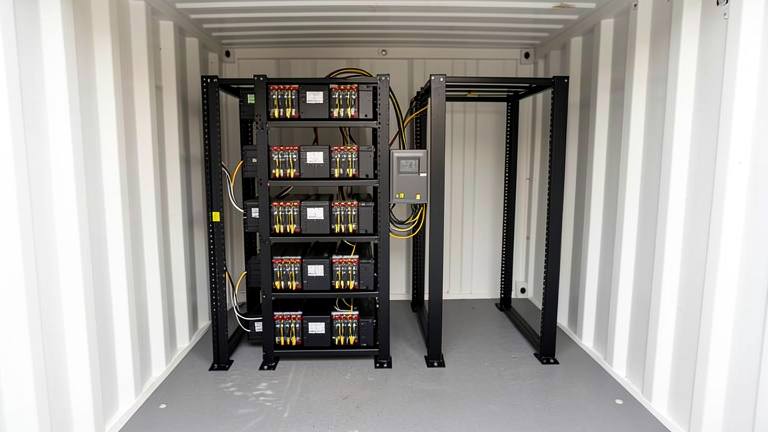
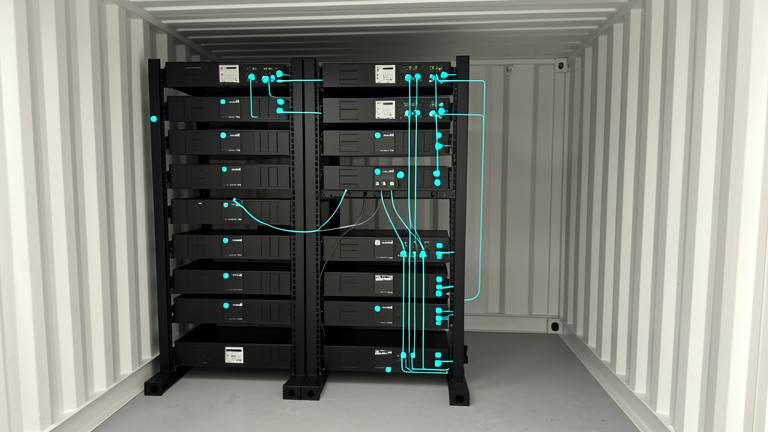
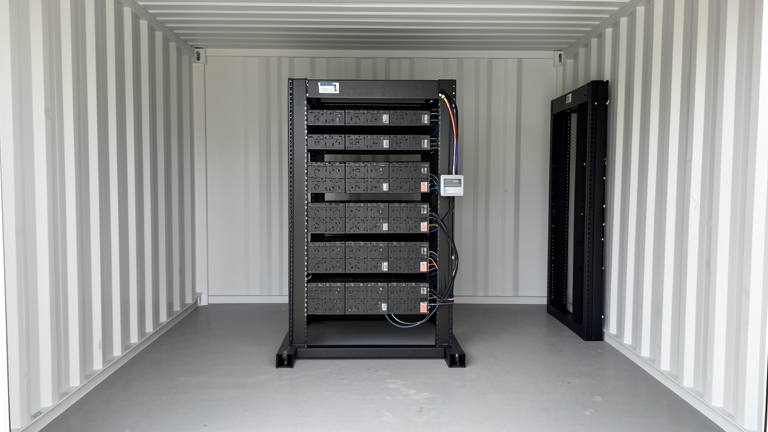
> The rack-module is the primary structural and electrical unit within a battery energy storage system (BESS), in which individual battery cells are grouped into functional groups. It serves as the central interface for the battery management system (BMS) to monitor cell voltages, temperatures, and currents. Precise monitoring of the rack-module is essential according to IEC 62933 / UTE storage guide to maximise cell lifespan and ensure system availability.
For this component, no own register is connected; therefore, no example value is provided here. Where the plant measures, the value is read as read-only and calculated internally. It is visible via connected components.
Monitored: continuous
The scenario: > Monitored: continuously · every cell, every rack The scenario: a weak cell silently limits capacity, resulting in lower yield per cycle, without an alarm. The AI: tracks outliers over cycles and reports them before they slow down the string. It identifies the trend before the limit is reached.
Precise monitoring of rack-modules minimises downtime and extends cycle life, directly shortening the BESS payback period. By identifying cell degradation at an early stage, targeted maintenance intervals can be planned. This prevents costly emergency interventions and ensures continuous feed-in power to the grid. usable capacity (kWh) · SoC (%) · Reserve (%) → — kWh available Calculation: Capacity × (SoC − Reserve) ÷ 100
Stromfee.US licenses the pool & wellness HVAC AI — proven in Europe, deployed on your existing plant. Single property, portfolio or chain.
Request software license →Grounded in the applicable national standards for battery energy storage systems. Same knowledge base as the European reference plant; presented anonymously.
Basis: the applicable national standards. Values shown are those measured on the plant, not target figures.