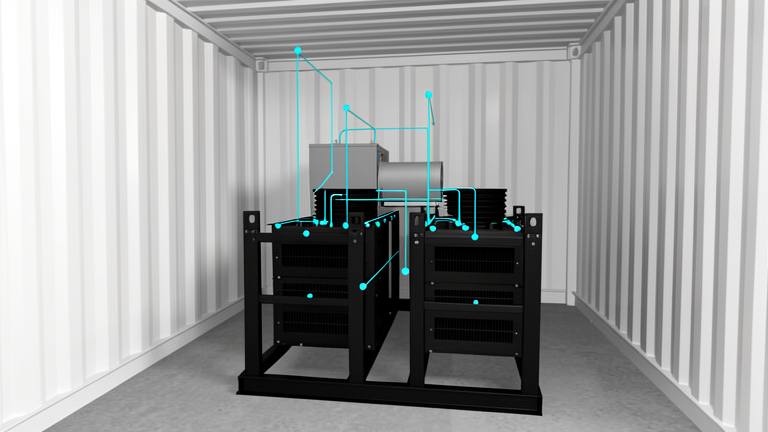
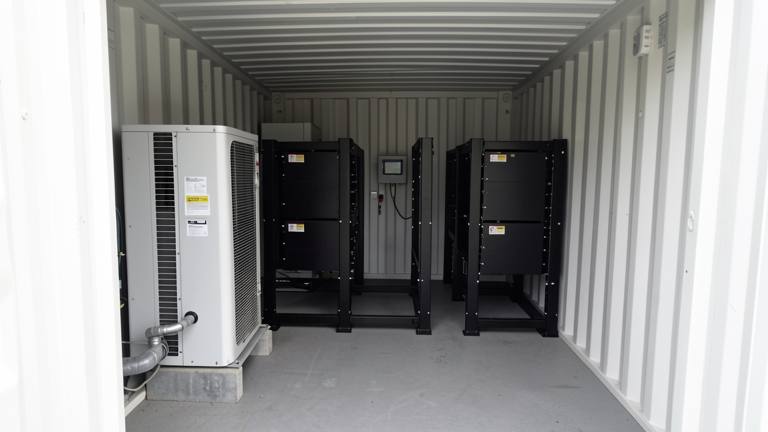
The Glass CHP · Battery storage

Chiller / Heat Exchanger

Ventilation/dehumidification — the silent 24/7 load, with heat recovery. Part of the glass family — like our glass BESS, biogas plant and CHP.
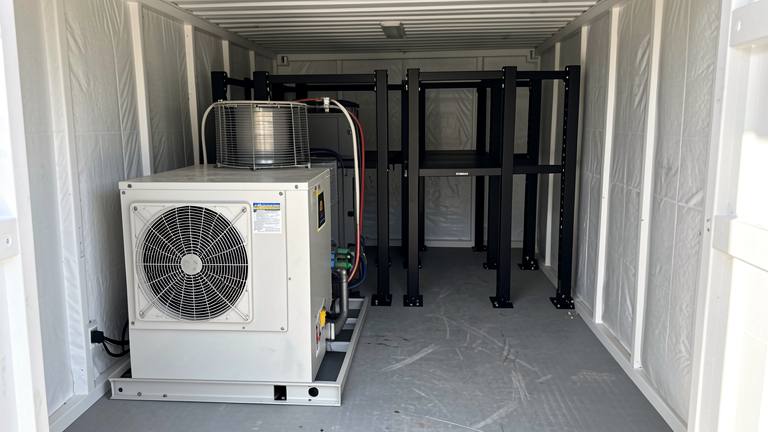
Chiller / Heat Exchanger
Outdoor air Fresh air Heat recovery Heating coil Hall Exhaust
Glass-box in 4 steps

Understand → See it live → What the AI does → Your benefit

Step 1 of 4
1
Understand
2
See it live
3
What the AI does
Your benefit

What is a Chiller / Heat Exchanger?

What is a Chiler / Heat Exchanger? A chiller or heat exchanger is in the battery storage (BESS) the central system for the thermal control of the battery cells. According to IEC 62933, temperature control is critical, as it directly affects chemical degradation and thus the lifespan of the cells. Efficient thermal management ensures operational stability and maximises usable cycles.

No own register — honestly

For this component, no own register is connected, which is why no example value is provided here. Where the system measures, the value is read as read-only and calculated internally. It becomes visible via connected components.

What the AI reads in this component

What the AI reads
  • Outlet temperature difference (cooling performance indicator vs load),
  • Difference between cell temperature and environment (early overheating alert),
  • Coolant flow rate (determination of pump efficiency),
  • Chiller electrical consumption (calculation of parasitic consumption)
Scenario

Monitored: continuous

The scenario: > Monitored: continuously · Interconnected sensors The scenario: a point remains too hot for a long time, the cell there ages faster, its lifespan shortened without anyone noticing immediately. The AI: identifies the deviating sensor and distinguishes cooling issues from cell problems. It detects the trend before the limit value is reached.

Why it is important

Precise monitoring reduces thermal degradation and extends the lifespan of the cells, which directly shortens the payback period of the BESS. By identifying cooling losses, the self-consumption of the system decreases. This increases the net discharge amount and thus optimises profitability per cycle. Continuous operation above optimum (K) → — K above optimum Calculation path: Rule of thumb: every +10 K ~ half of the calendar life

More pool worlds

Browse the 40 wizards

← PreviousFresh air▦ All 40
License the software

Bring the glass-box AI to your pool.

Stromfee.US licenses the pool & wellness HVAC AI — proven in Europe, deployed on your existing plant. Single property, portfolio or chain.

Request software license →
Standards & norms

What the rules require — Chiller / Heat Exchanger

Grounded in the applicable national standards for battery energy storage systems. Same knowledge base as the European reference plant; presented anonymously.

Basis: the applicable national standards. Values shown are those measured on the plant, not target figures.